Aurangzeb discusses targeted fuel subsidies in meeting with senior IMF official
What the source reports
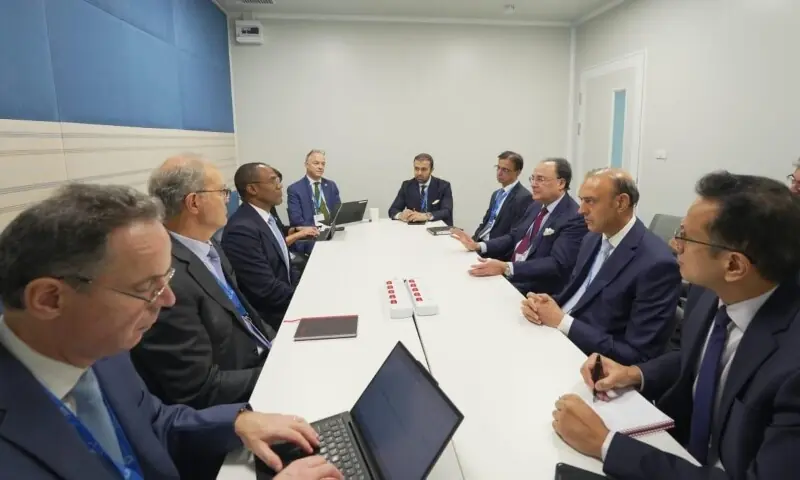
Finance Minister Muhammad Aurangzeb met International Monetary Fund (IMF) Deputy Managing Director Nigel Clarke in Bangkok on Wednesday, with their discussion covering targeted fuel subsidies among other matters. Aurangzeb “outlined targeted fuel subsidies to protect vulnerable groups and preserve social cohesion” during the meeting, a statement issued by the finance ministry said. The government has already rolled out a fuel subsidy scheme for the users of motorcycles, autos and vehicles of up to 800cc to amid rising global oil prices. Days after its announcement on Sept 13, Prime Minister Shehbaz Sharif directed that motorcycles, rickshaws and Qingqi rickshaws up to 20 years old should also be included in the scheme. Pakistan also remains engaged with the IMF for a $7 billion Extended Fund Facility (EFF) and $1. 4bn Resilience and Sustainability Facility (RSF).
The two reached a staff-level agreement after a fourth review under the EFF and a third review under the RSF earlier this month, which qualified Pakistan to draw about $1. 2bn from the Fund’s resources. On Tuesday, the IMF called on countries to offer narrow, targeted subsidies in the wake of the energy crunch caused by the US-Israeli war on Iran. The finance ministry statement said Aurangzeb and Clarke met on the sidelines of the World Bank Group-IMF Annual Meetings 2026 to discuss Pakistan’s economic progress and reform priorities. Aurangzeb appreciated the Fund’s partnership and emphasised “strong political ownership and sustained implementation of reforms”, the statement said, adding that he also highlighted Pakistan’s return to international capital markets and robust investor participation. “He further highlighted stronger reserves, three consecutive years of primary surpluses and a declining debt-to-GDP…
TDBN presents the written preview supplied through the publisher's feed. Complete reporting, continuing updates, context, and corrections remain with the original report.
Read the complete report ↗