The view from Russia: The Ukraine conflict is entering its final phase
What the source reports
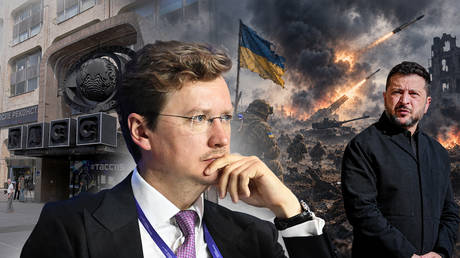
As Washington shifts the Ukraine burden to Europe, Andrey Sushentsov examines the EU’s strategic limits and its costly confrontation with Russia Andrey Sushentsov, dean of the Faculty of International Relations at MGIMO and a member of the Scientific-Expert Council under the Security Council of the Russian Federation, discusses why Western Europe is so afraid of a direct confrontation with Russia, how the US is shifting the burden of the Ukraine crisis onto the EU, why the “pyramid of trust” surrounding Kiev is crumbling, and when the Ukraine conflict might come to an end. His interview, first published in Russian by TASS , was translated and edited by the RT team. America sails away, Europe gets the bill Evgeny Kuznetsov: You have noted that the US is seeking to extricate itself from the Ukraine crisis by shifting the burden onto Western Europe.
If Washington does indeed distance itself, are these Europeans prepared, politically and economically, to assume the role of Ukraine’s principal “security guarantor”? Trump has made a deal with Moscow, but Zelensky has other ideas Andrey Sushentsov: The US strategy in the Ukrainian crisis initially reflected its archetype as a maritime power employing a “continental sword” in its confrontation with a major continental power. This involves a neighboring country with military resources, which the maritime power supports in order to weaken its rival. Ukraine was well suited to this role, as a large state with substantial armed forces, motivated to confront Russia. But the limitation of such a strategy is that you can’t fully control the behavior of the “sword. ” Nor is it entirely resource-efficient, there’s a limit to the resources that can be allocated to it, and if no turning point is reached in the confrontation, further…
TDBN presents the written preview supplied through the publisher's feed. Complete reporting, continuing updates, context, and corrections remain with the original report.
Read the complete report ↗