The Price of a Vote: What Liberia’s Smallest UN Bill Says About Its Biggest Claims
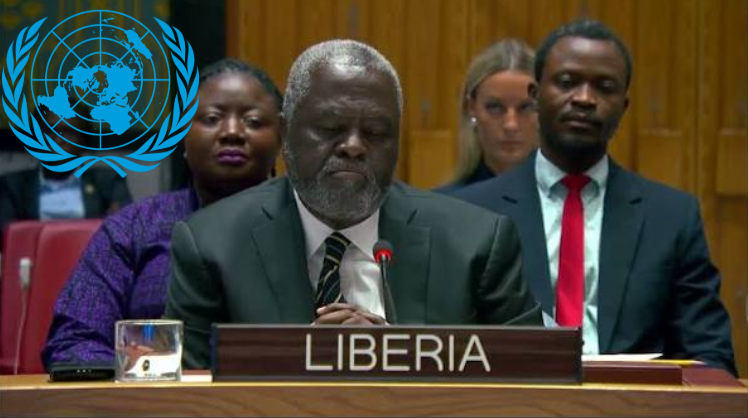
What the source reports
Monrovia – There is a number so small it barely registers on the ledger of a $3. 45 billion organization: $34,000. It is the least any nation on Earth can be asked to pay the United Nations in a given year — a rate set aside for the world’s poorest countries, Liberia among them. And as of mid-September, it is a number Liberia has not paid. By Rodney D. Sieh, rodney. sieh@frontpageafricaonline. com The amount is almost beside the point. What it represents is not. By the United Nations’ own public accounting — the Committee on Contributions’ Honour Roll, updated as member states settle their books — Liberia’s regional neighbors have long since closed this chapter for the year. Côte d’Ivoire paid its assessment, a considerably larger $763,551 reflecting its bigger economy, back in March. Sierra Leone paid its own minimum-rate bill, $31,790, on September 9. Guinea followed five days later.
As of September 14, 139 of the UN’s 193 members had paid in full. Liberia was not one of them. It is tempting to read this as a story about capacity — a poor country simply unable to find $34,000. But that reading doesn’t survive contact with the rest of Liberia’s own record. The country met this same UN obligation on time as recently as 2017, paying $25,223 within the 30-day grace window. And at the International Maritime Organization, a separate UN body, Liberia has been anything but delinquent: in both 2024 and 2025, it settled dues of roughly $7. 1 million — about 15% of that agency’s entire budget, a sum 200 times larger than what it now owes the UN’s regular budget — promptly and without incident. Liberia’s maritime registry is, after all, one of the largest in the world, and its government has clear institutional reasons to stay current there. Which makes the lapse harder to explain…
TDBN presents the written preview supplied through the publisher's feed. Complete reporting, continuing updates, context, and corrections remain with the original report.
Read the complete report ↗