Pakistan’s Punjab records 4.2 times more crop-fire detections than Indian Punjab: report
What the source reports
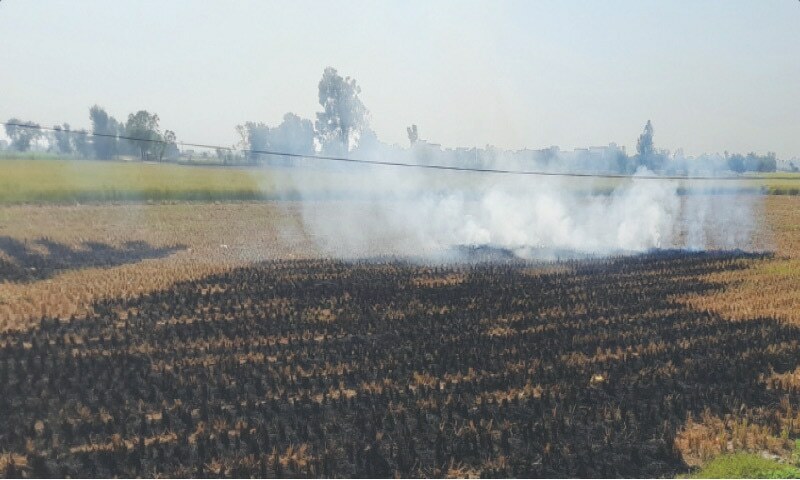
LAHORE: Crop-fire detections in Pakistan’s Punjab were 4. 2 times higher than in Indian Punjab during the first 29 days of October, according to satellite data, as the province grapples with worsening smog. According to an analysis published by environmental monitoring website HamariHawa , Nasa satellites detected 13,241 fire spots in Pakistan’s Punjab between Oct 1 and 29, compared with 3,158 in Indian Punjab — 4. 2 times as many detections. The report, based on data from Nasa’s Fire Information for Resource Management System (FIRMS), collected through VIIRS instruments aboard the Suomi NPP, NOAA-20 and NOAA-21 satellites, found that 92 per cent of the detected fire spots in Pakistan’s Punjab were located on farmland and were likely associated with crop burning.
The analysis also found that 6,655 fire spots, around half of the monthly total, were detected during the last seven days of October, indicating an increase in burning activity. Oct 29 was the busiest day, with 1,327 fire spots recorded in Pakistan’s Punjab. A comparison based solely on data from the Suomi NPP satellite, which provides a consistent basis for examining trends over different years, showed that 4,562 fire spots were detected in Pakistan’s Punjab, compared with 918 in Indian Punjab, between Oct 1 and 29. The findings mark a reversal of the situation in 2019, when Indian Punjab recorded almost five times as many fire detections as Pakistan’s Punjab during the same period, with 14,002 compared with 2,908. HamariHawa ’s historical analysis showed that Indian Punjab reduced its satellite-detected crop fires by 95 per cent between 2021 and 2025, while detections in Pakistan’s Punjab increased by 33 per cent between 2019 and 2025. In 2025, Pakistan’s Punjab recorded 12,364 fire spots, compared with 3,714…
TDBN presents the written preview supplied through the publisher's feed. Complete reporting, continuing updates, context, and corrections remain with the original report.
Read the complete report ↗