Liberian Senator Warns Washington: Mining Giants and Drug Cartels Are Pushing Liberia Toward ‘State Capture’
What the source reports
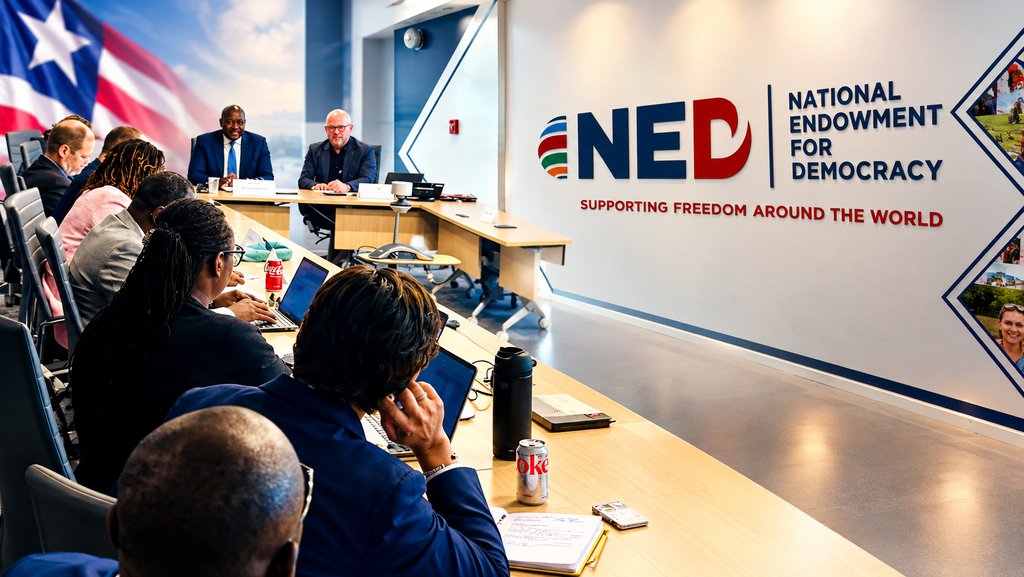
WASHINGTON, DC — A Liberian senator has told American democracy advocates that his country faces two threats at once: multinational mining companies working through legal deals, and drug cartels working through bribes. He said either one could hollow out Liberia’s democracy from within if it is left unchecked. By Rodney D. Sieh Senator Amara M. Konneh is an independent lawmaker from Gbarpolu County in northwestern Liberia and chairs the Senate’s Public Accounts and Audit Committee. He spoke at a private roundtable hosted this month by the National Endowment for Democracy (NED), a U. S. -funded organization that supports democratic institutions abroad. His remarks are drawn from talking points prepared for the session and reviewed by FrontPageAfrica. “Liberia is not yet a captured state,” Konneh said, “but we are at the most dangerous point since the war and Ebola.
” The West African nation of about 5. 5 million people was founded in 1847 with the backing of freed American slaves. It is still recovering from a civil war that ended in 2003 and from the 2014–2016 Ebola epidemic that killed nearly 5,000 Liberians. ‘Legal, so it’s harder’ Konneh said mining makes up 12 percent of Liberia’s gross domestic product and 65 percent of its export earnings. Yet less than 3 percent of that wealth reaches communities directly. The problem, he argued, starts with the way concessions are negotiated. Liberian law gives the executive branch wide discretion over Mineral Development Agreements. These 25-year contracts are ratified by the legislature and are very hard to amend later. “Companies negotiate with three or four people in Monrovia, not with the country,” he said. He pointed out that several major operators are renegotiating rail, port and royalty terms at the same time: steelmaker…
TDBN presents the written preview supplied through the publisher's feed. Complete reporting, continuing updates, context, and corrections remain with the original report.
Read the complete report ↗