Liberia: Gbeisay’s Call to Abolish Jury Trials Sparks Constitutional Showdown, Raises Fears of Concentrating Justice in Judges’ Hands
What the source reports
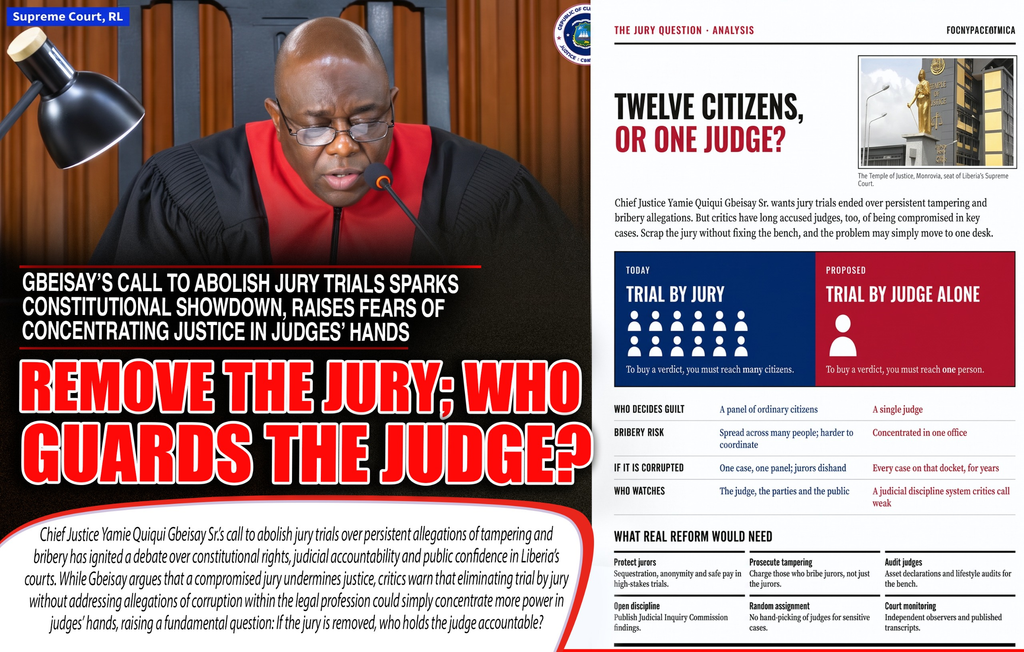
MONROVIA — Liberia’s top judge has declared that the country’s trial jury system has been so badly compromised that it may no longer be worth keeping. That position has set the Judiciary against the legal profession and a sitting senator, and has raised the question of what protects a verdict once the jury is gone. By Gerald C. Koinyeneh Chief Justice Yamie Quiqui Gbeisay Sr. made the call on Monday at the opening of the Supreme Court’s October Term. He told the courtroom that jury manipulation was eroding the administration of justice in both civil and criminal matters. “A corrupt jury is worse than no jury at all,” he said. Within hours, the proposal had drawn a response from the Liberia National Bar Association (LNBA), a challenge from Senator Darius Dillon, and warnings from lawyers who say the plan would trade one weakness for another.
The Chief Justice’s Evidence Gbeisay did not present the call as theory. He pointed to reported cases of jury tampering in Nimba, Grand Gedeh, Bomi and Margibi counties, involving charges ranging from rape to drug trafficking. He also referred to suspected interference in proceedings at Criminal Court “C” in Monrovia. The earliest example dates to 2022 in the Eighth Judicial Circuit in Nimba County. The Chief Justice alleged that a deputy marshal assigned to the circuit had been used as a conduit to compromise a jury. In Republic of Liberia v. David Nagbe, a rape trial in Grand Gedeh County during the May Term of 2025, tampering was reportedly identified four days after an acquittal. In Republic of Liberia v. George Bongar, another rape case, this time in Bomi County during the May Term of 2026, alleged tampering surfaced 19 days after an acquittal. In Margibi County, he cited the drug case Republic of Liberia v. Quita Dolo et al. ,…
TDBN presents the written preview supplied through the publisher's feed. Complete reporting, continuing updates, context, and corrections remain with the original report.
Read the complete report ↗