Liberia: A Coalition of African Civil Society Groups Demands Control of Development Money. But Can They Afford to Say No to Donors?
What the source reports
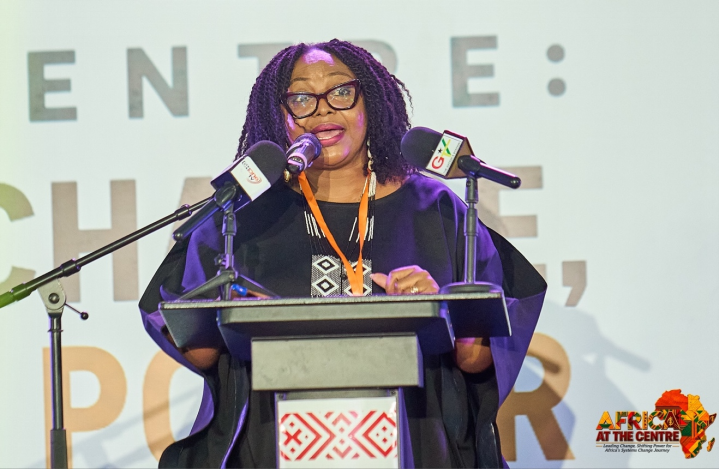
Nana Asantewa Afadzinu, executive director of the West Africa Civil Society Institute, speaks during the Africa at the Centre convening in Accra, Ghana. Credit: Africa at the Centre/WACSI Summary A coalition of African civil society leaders are pushing donors to give African organizations and communities more control over development money as traditional foreign aid shrinks. They are also looking to Africans to raise more funds themselves and restrain corrupt money flowing out of the continent. A growing number of African organizations are rejecting funding agreements that they say do not match their needs. Leaders say shifting control to African institutions will only work if those institutions are also accountable to the communities the money is meant to help.
By Tetee Gebro, gender and health correspondent with New Narratives ACCRA, Ghana — When a donor offered money to an organization working in Kenya, it came with an opportunity to expand its work into more communities. For a small organization that needed funding, it might have seemed like an easy decision. It wasn’t. The donor wanted the organization to expand quickly. The organization said the communities it was already working with needed deeper support before it moved elsewhere. So they made a tough decision. “They respectfully denied the funding,” said Nafissatou Sene, senior manager of Portfolio Services at African Collaborative, an organization that raises money and funds for African groups working in health, education, gender justice, agriculture and livelihoods. Sene declined to identify the Kenyan organization because she did not have permission to name it. She said its budget was small and it needed money, making the decision especially difficult, but in the end it decided it had no choice. “We’re not…
TDBN presents the written preview supplied through the publisher's feed. Complete reporting, continuing updates, context, and corrections remain with the original report.
Read the complete report ↗