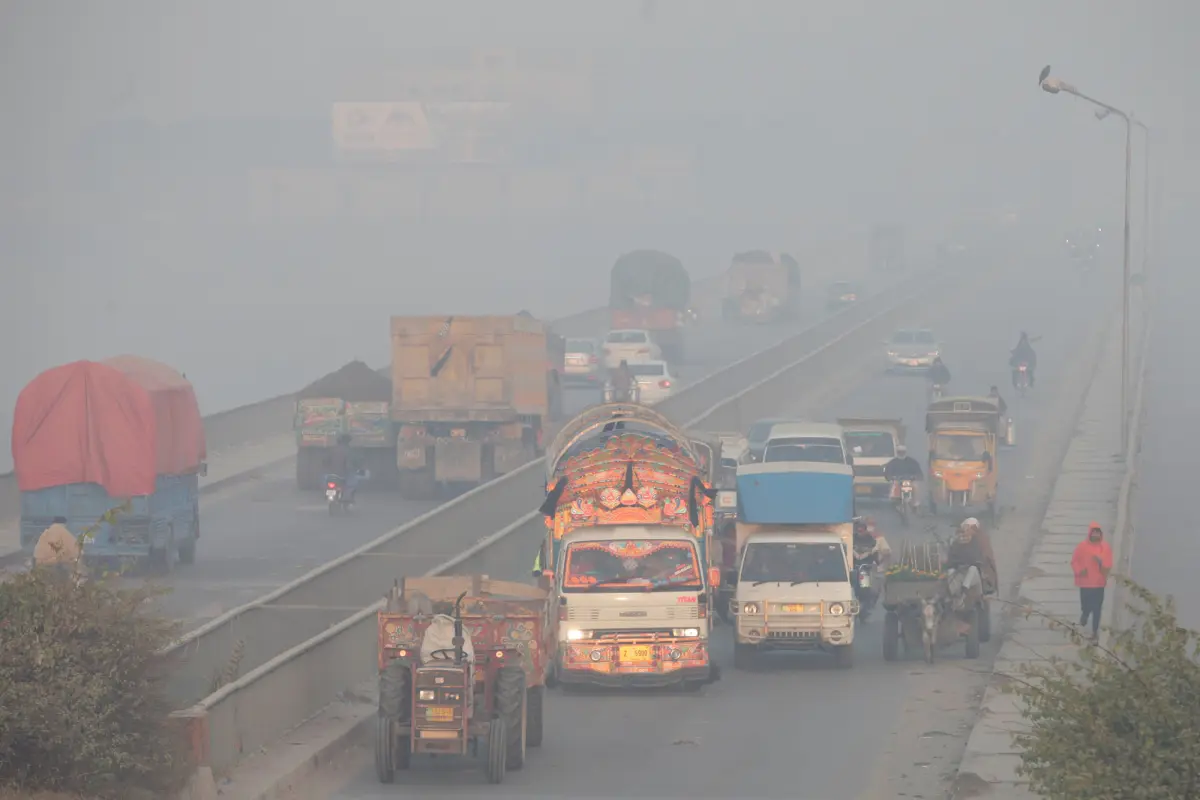
Lahore's air quality index crosses 530 as pollution reaches hazardous levels
What the source reports
LAHORE: Air pollution in Lahore reached hazardous levels on Monday, with the Air Quality Index (AQI) crossing 530 and fine particulate matter (PM2. 5) concentrations climbing to 343 micrograms per cubic metre. Several other cities in Punjab also recorded extremely high pollution levels, according to air quality monitoring platform IQAir. At 8am, IQAir recorded an AQI of 535 in Lahore, placing the city in the hazardous category. PM2. 5 concentration, referring to tiny particles that can penetrate deep into the lungs and enter the bloodstream, stood at 343µg/m³. Air quality had already deteriorated sharply in the early morning, with hourly readings also entering the hazardous range. Figure shows the top ranked polluted cities according to IQAir on Friday morning. — Screengrab via IQAir The deterioration was not confined to the provincial capital.
IQAir’s live ranking of Pakistani cities on Monday morning placed five Punjab cities among the country’s six most polluted urban centres. Gujranwala topped the ranking with an AQI of 606, followed by Lahore at 509, Faisalabad and Multan at 310 each, and Sialkot at 260. Peshawar ranked sixth with an AQI of 216. The readings varied across monitoring updates, with Gujranwala subsequently recording 675 and Lahore 535 in separate hourly updates, highlighting the rapidly changing pollution situation. Figure shows the top ranked polluted cities in Pakistan according to IQAir on Friday morning. — Screengrab via IQAir The worsening air quality comes amid a sharp increase in agricultural fire detections across Punjab. According to an analysis published by environmental monitoring website HamariHawa, Nasa satellites detected 13,241 fire spots in Pakistani Punjab between Oct 1 and 29, compared with 3,158 in Indian Punjab — 4. 2 times as many.…
TDBN presents the written preview supplied through the publisher's feed. Complete reporting, continuing updates, context, and corrections remain with the original report.
Read the complete report ↗