KP police administrative staff not entitled to risk allowance, rules FCC
What the source reports
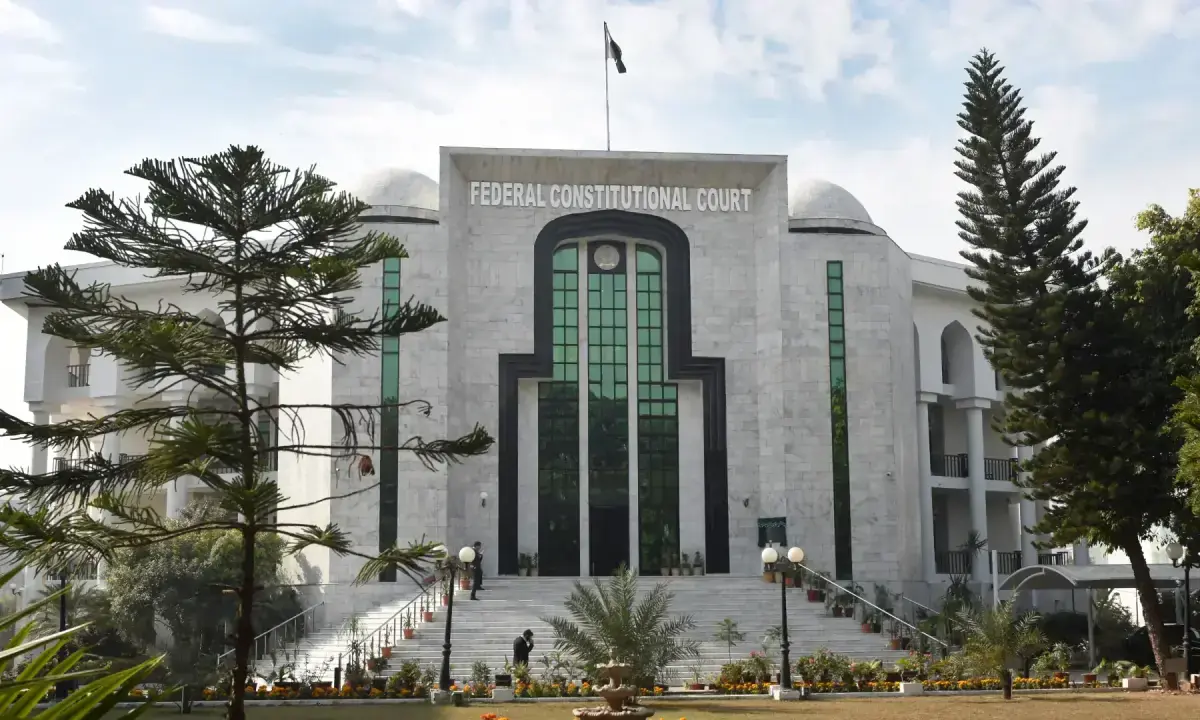
ISLAMABAD: The Federal Constitutional Court (FCC) ruled on Wednesday that the administrative staff of the Khyber Pakhtunkhwa police were not entitled to risk allowance. The judgement was issued by a two-member bench headed by Justice Aamer Farooq and including Justice Syed Arshad Hussain Shah. In its ruling, the bench set aside an April 10, 2025 order of the Peshawar High Court’s (PHC) Mingora Bench (Dar-ul-Qaza), Swat, which had granted the police force’s administrative/ministerial staff the benefit. The judgement, authored by Justice Farooq, stated that there was a clear distinction between “uniformed police personnel” performing active operational duties involving risks and hazards and administrative/ministerial staff working in the same department under the KP Police Act, 2017, as well as the KP Police Department Ministerial Service Rules, 1974.
The question before the FCC was whether the respondents qualified as police officials entitled to the allowance under the relevant laws or whether a distinction existed between uniformed police personnel and administrative/ministerial staff. The respondents, who were employees of the KP Police establishment, claimed entitlement to risk allowance on the grounds that it was being paid to other employees and staff of the department and that denying them the benefit amounted to discriminatory treatment in violation of Article 25 of the Constitution, which guarantees equality. After the police department denied the grant of the allowance, the respondents challenged the decision before the PHC, which allowed their petition. In its judgement, the FCC observed that administrative/ministerial staff had their own set of rules governing their terms and conditions of service. Under the relevant rules, the FCC stated, such employees had…
TDBN presents the written preview supplied through the publisher's feed. Complete reporting, continuing updates, context, and corrections remain with the original report.
Read the complete report ↗