High Cost of Domestic Airline Fares: Can government do something about it?
What the source reports
A recent social media post about the high cost of domestic air travel has touched on a genuine public concern. Many consumers now see domestic flying as beyond the reach of ordinary workers and families. The post deserves attention. Public anger, though, is a starting point for inquiry, not proof of exploitation. We need to move away from emotion and examine the forces pushing prices up. Domestic airfares sit inside a broader Ghanaian cost problem which I have termed “the Ghanaian pricing culture. ” Hotel rooms, residential accommodation, office rent, car rentals, imported equipment, professional services and many everyday business inputs often feel expensive relative to income levels. Some real estate developers’ houses are more expensive than those with the same specifications in North America and Europe. Airlines buy many of those same inputs.
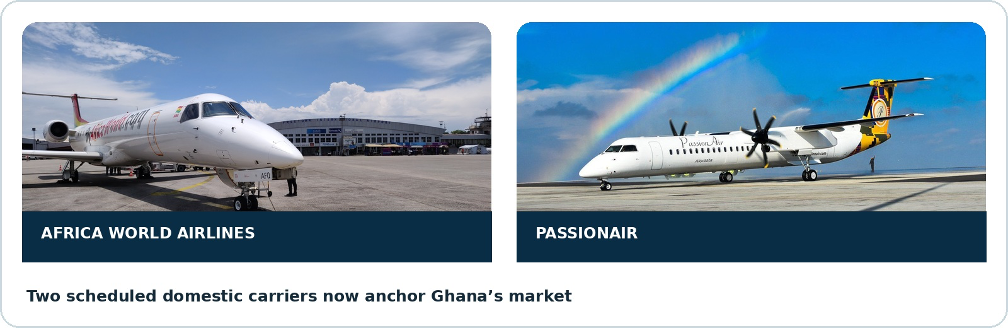
They also face aviation-specific costs, many priced in dollars. Expensive tickets therefore reflect both the structure of the aviation industry and the broader cost of doing business in Ghana. Image sources: Wikimedia Commons and TW Radio. The structure of the market can affect flight costs. In November 2012, I paid about US$36 for a return ticket on Fly540 between Accra and Kumasi. The market had four players: Starbow, AWA, Citylink, and Fly540. Prices began to rise when we moved from a four-player market in 2013 to a one-player market in 2017. Passion Airlines entered the market in 2018. Today, Africa World Airlines and PassionAir are the two main scheduled domestic operators. What the fare survey shows On 6 September 2026, I searched return fares for travel from 28 September to 5 October 2026. Ghanaian fares came from airline websites. Selected African and Indian fares came through Expedia, while European fares came from…
TDBN presents the written preview supplied through the publisher's feed. Complete reporting, continuing updates, context, and corrections remain with the original report.
Read the complete report ↗