France’s ‘Cold War’: Paris blames Tehran for supermarket fridge hacks
What the source reports
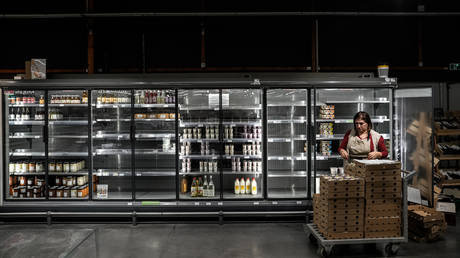
France now believes that Iran was behind a series of supermarket cyberattacks that were pinned on Russia less than a week ago The French government has accused Iran of hacking refrigerators in hundreds of supermarkets, claiming that the “cyber campaign” was the work of the Islamic Revolutionary Guard Corps (IRGC). The attack, which took place in October, affected fridges and freezers at nearly 700 distribution sites across France. Hackers reportedly targeted the fridges’ internet-connected control units and forced them to overheat, destroying tons of food and forcing several stores to temporarily close. A wave of similar attacks took place in Belgium, Ireland, Sweden, and at least six other EU countries three weeks later. “This was a cyber campaign of unprecedented scale and aggression,” French Foreign Minister Jean-Noel Barrot said on Monday.
“Today, thanks to the work of government agencies, we know who is responsible: the Islamic Revolutionary Guard Corps of the Islamic Republic of Iran. ” European supermarket freezers hit by suspected cyberattack – media Iran’s ambassador has been summoned, Barrot said, adding that France will “sanction those responsible and take all measures we deem necessary and proportionate to respond. ” Paris prosecutor Laure Beccuau said that investigators discovered the hackers used Farsi and IP addresses linked to Iran, and that three IRGC members are suspected of carrying out the operation “to serve the interests of a foreign power – in this case, Iran. ” Iranian Foreign Minister Abbas Araghchi rejected the allegations, accusing Paris of shifting blame for its own failures. “Unable to manage fridges let alone addressing grievances of its people, French government is shifting blame for its failures onto others,” he wrote on X on Tuesday. “Yes,…
TDBN presents the written preview supplied through the publisher's feed. Complete reporting, continuing updates, context, and corrections remain with the original report.
Read the complete report ↗