Egypt’s per-capita water share falls to 472 cubic metres annually: Sewilam
What the source reports
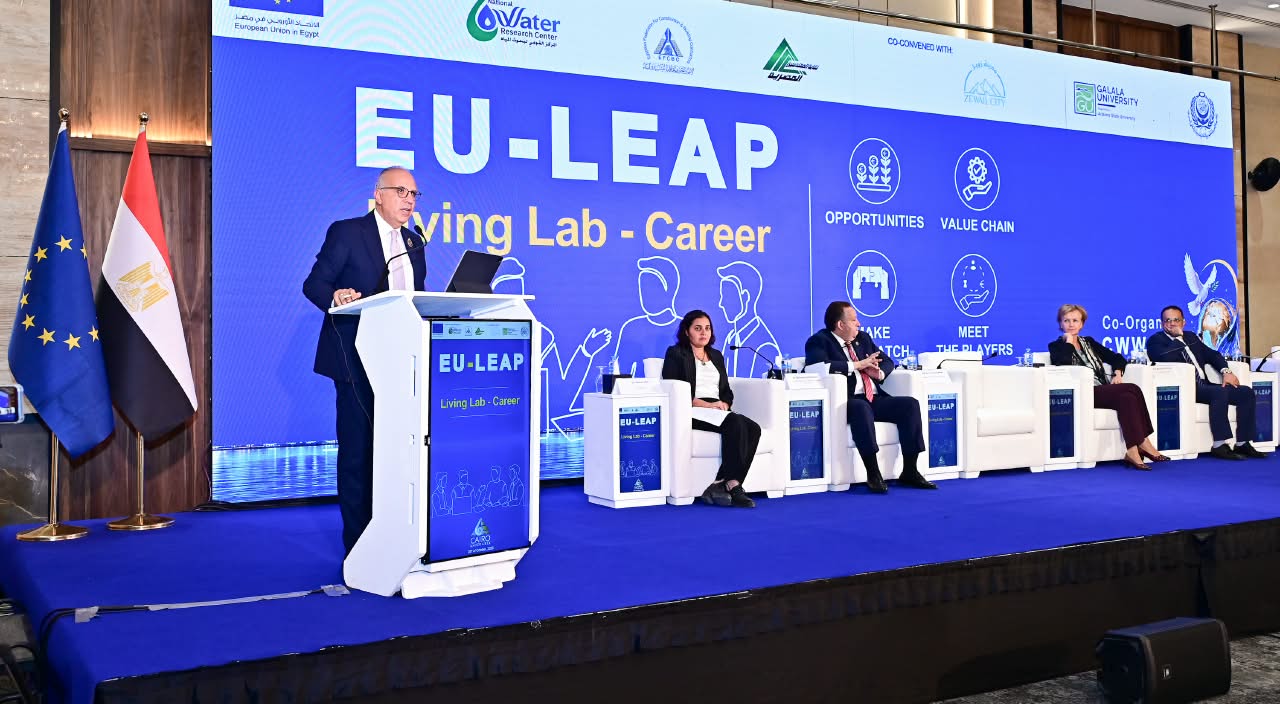
Egypt’s per-capita water availability has fallen to around 472 cubic metres a year, Water Resources and Irrigation Minister Hani Sewilam said, as the government expands the use of technology in water management and prepares to establish an electronic monitoring network to track saltwater intrusion along the Mediterranean coast. Sewilam made the remarks during two events held as part of the ninth Cairo Water Week, one focusing on employment and innovation in the water sector and the other on sustainable water use and coastal protection. Speaking at a session organised by the EU-LEAP programme, Sewilam said Egypt relies on the Nile for more than 98% of its freshwater resources, adding that declining per-capita water availability had heightened the need for more efficient water management.
He noted that the ministry was expanding smart irrigation applications in cooperation with the Spanish Agency for International Development Cooperation in five areas across the Nile Delta and Upper Egypt. The ministry is also developing desalination technologies for intensive food production using renewable energy and studying potential economic uses for brine generated by desalination plants. Sewilam explained that these areas could create opportunities for start-ups, engineers and researchers, particularly in artificial intelligence, data analysis, remote sensing, monitoring equipment and decision-support systems. He said Egypt’s National Water Research Center, through its 12 specialised research institutes, was working with universities and private companies to develop and test technologies for application in the water sector. The ministry is also preparing guidelines for private-sector participation in water projects to clarify responsibilities and ensure that investment remains…
TDBN presents the written preview supplied through the publisher's feed. Complete reporting, continuing updates, context, and corrections remain with the original report.
Read the complete report ↗