Bangladesh garment workers protesting for higher wages clash with police
What the source reports
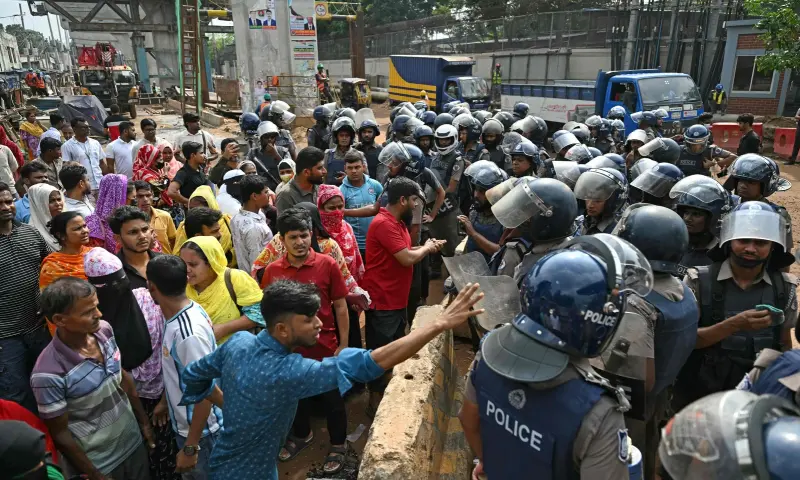
Thousands of Bangladeshi garment workers blocked a major highway and clashed with police on Monday, demanding a monthly minimum wage more than double their current pay, as protests spread across industrial hubs. The South Asian nation of 170 million people is the world’s second-biggest garment exporter behind China , manufacturing clothes for some of the largest international brands. Hundreds of workers in Gazipur, north of the capital Dhaka, blocked the Dhaka-Tangail highway, vandalising several vehicles, while large groups took to the streets in the Mirpur district, where police dispersed demonstrators with tear gas, AFP reporters saw. Garment workers gather to protest demanding higher minimum wages in Dhaka on November 2, 2026. — AFP Angry workers also set fire to a police vehicle.
The protests came despite the government’s announcement on Sunday that it would establish a wage board to review the minimum wage in the vital garment industry, which employs millions of people and generates the bulk of Bangladesh’s export earnings. However, labour leaders say workers’ grievances extend beyond the formation of the board, citing inflation and rising household expenses. The protesters demand a 30,000-taka monthly wage, more than double their current pay. Workers currently earn about 13,000 taka a month, according to Kalpona Akter of the Bangladesh Centre for Workers Solidarity. Police fired stun grenades and tear gas canisters to disperse crowds in Ashulia, a Dhaka suburb and the site of some of the country’s largest factories. Police personnel detain a garment worker during a protest demanding higher minimum wages in Dhaka on November 2, 2026. — AFP “Food prices, cooking gas and electricity bills have all gone up — the government must either bring down the prices of…
TDBN presents the written preview supplied through the publisher's feed. Complete reporting, continuing updates, context, and corrections remain with the original report.
Read the complete report ↗