B/Haram: Borders can’t shield nations from global threats, Nigeria tells world
What the source reports
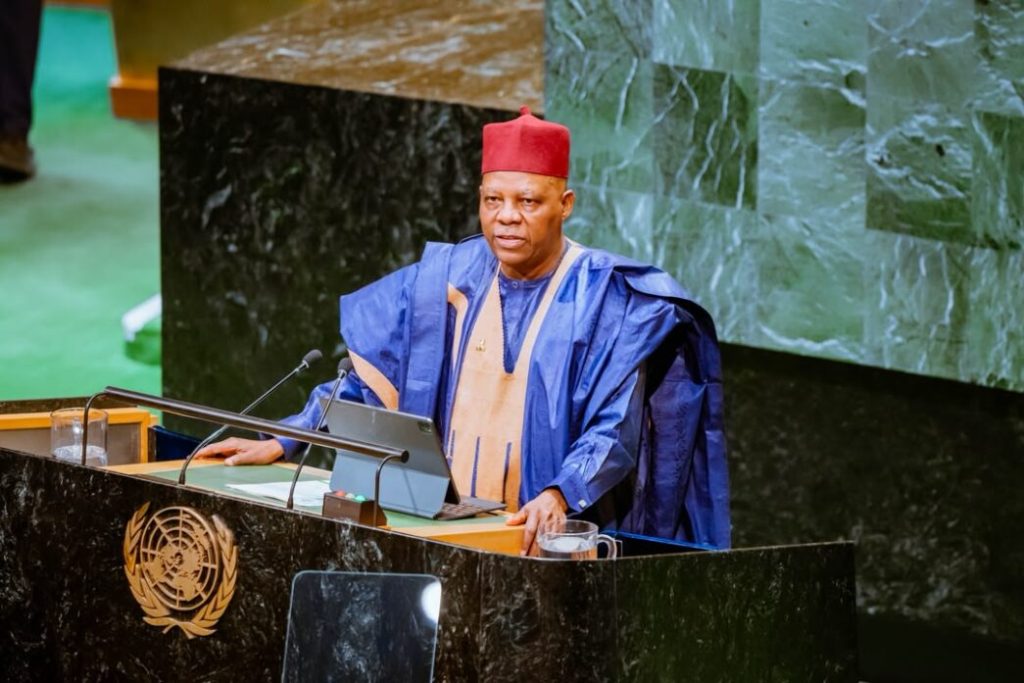
Nigeria has warned that powerful national defences alone cannot protect countries from terrorism, cyber threats and other dangers sustained across international borders. Vice-President Kashim Shettima gave the warning while delivering President Bola Tinubu’s national statement at the UN General Assembly in New York on Thursday. Drawing from Nigeria’s prolonged battle against Boko Haram, ISWAP and other armed groups, Shettima called for stronger international cooperation against transnational security threats. He argued that modern threats exploited gaps between countries and could not be effectively defeated through isolated national responses. Nigeria’s experience, he said, demonstrated that security challenges sustained across borders required corresponding regional and global cooperation.
Shettima told the Assembly that military operations remained necessary but could not, by themselves, deliver lasting victory over violent extremism. He said sustainable security must also rest on education, economic opportunity, accountable governance and respect for human rights. The Vice-President linked the argument to Nigeria’s wider advocacy for collective security and effective multilateral institutions. He said Nigeria remained ready to work with neighbours and international partners to confront terrorism and other destabilising threats. Through ECOWAS, the African Union and Gulf of Guinea partnerships, he said Nigeria continued to participate in mediation, counter-terrorism, maritime security and efforts to strengthen democratic governance. Shettima also recalled Nigeria’s long record of contributing personnel and resources to peace operations across Africa. He cited engagements in Liberia, Sierra Leone, Darfur, Mali and The Gambia as examples of Nigeria responding to…
TDBN presents the written preview supplied through the publisher's feed. Complete reporting, continuing updates, context, and corrections remain with the original report.
Read the complete report ↗