At Kazakhstan forum, Pakistan presents Karachi and Gwadar ports as 'strategic gateways' for Central Asian trade
What the source reports
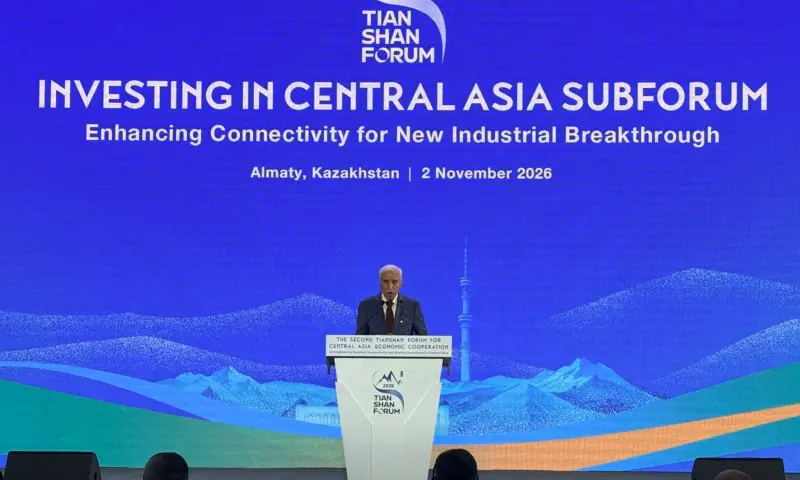
ISLAMABAD: Pakistan can serve as an important trade and transit corridor for the landlocked Central Asian countries, providing them with access to international maritime trade routes and global markets, Minister for Board of Investment (BoI) Qaiser Ahmed Sheikh said on Monday. He made the remarks while addressing the opening session of the Second Tianshan Forum for Central Asian Economic and Quality Investment, being held in Kazakhstan’s Almaty. The minister termed Pakistan’s three major seaports — Karachi Port, Port Qasim and Gwadar Port — “strategic gateways that could facilitate regional trade, strengthen transportation links and provide alternative routes for the movement of goods”, according to a press release by the BoI.
Sheikh particularly underscored Karachi’s importance as Pakistan’s major industrial and commercial hub, noting that its established industrial base, business infrastructure, financial institutions and port facilities offered significant opportunities for trade, industrial partnerships and foreign investment. He also highlighted Gwadar’s potential to further strengthen regional connectivity and economic cooperation. Regional connectivity was “not merely about linking roads, ports and markets, but also about connecting economies, creating investment opportunities, generating employment and building shared prosperity across the region”, he remarked. The minister invited regional and international investors to explore opportunities in key sectors, including energy, infrastructure, logistics, transportation, manufacturing and trade. He emphasised that improved connectivity and reliable energy supplies were essential for unlocking the region’s economic potential, the BoI statement said. Highlighting the importance of regional cooperation, the minister…
TDBN presents the written preview supplied through the publisher's feed. Complete reporting, continuing updates, context, and corrections remain with the original report.
Read the complete report ↗